ServicesPediatric Crowns
Pediatric Crowns in Marlborough
When decay or a break has taken too much of a tooth for a filling to hold, a crown covers the whole tooth and keeps it working. We explain each crown option in plain English, so you can choose with a clear picture of what your child gets.
What a Crown Does for a Child's Tooth
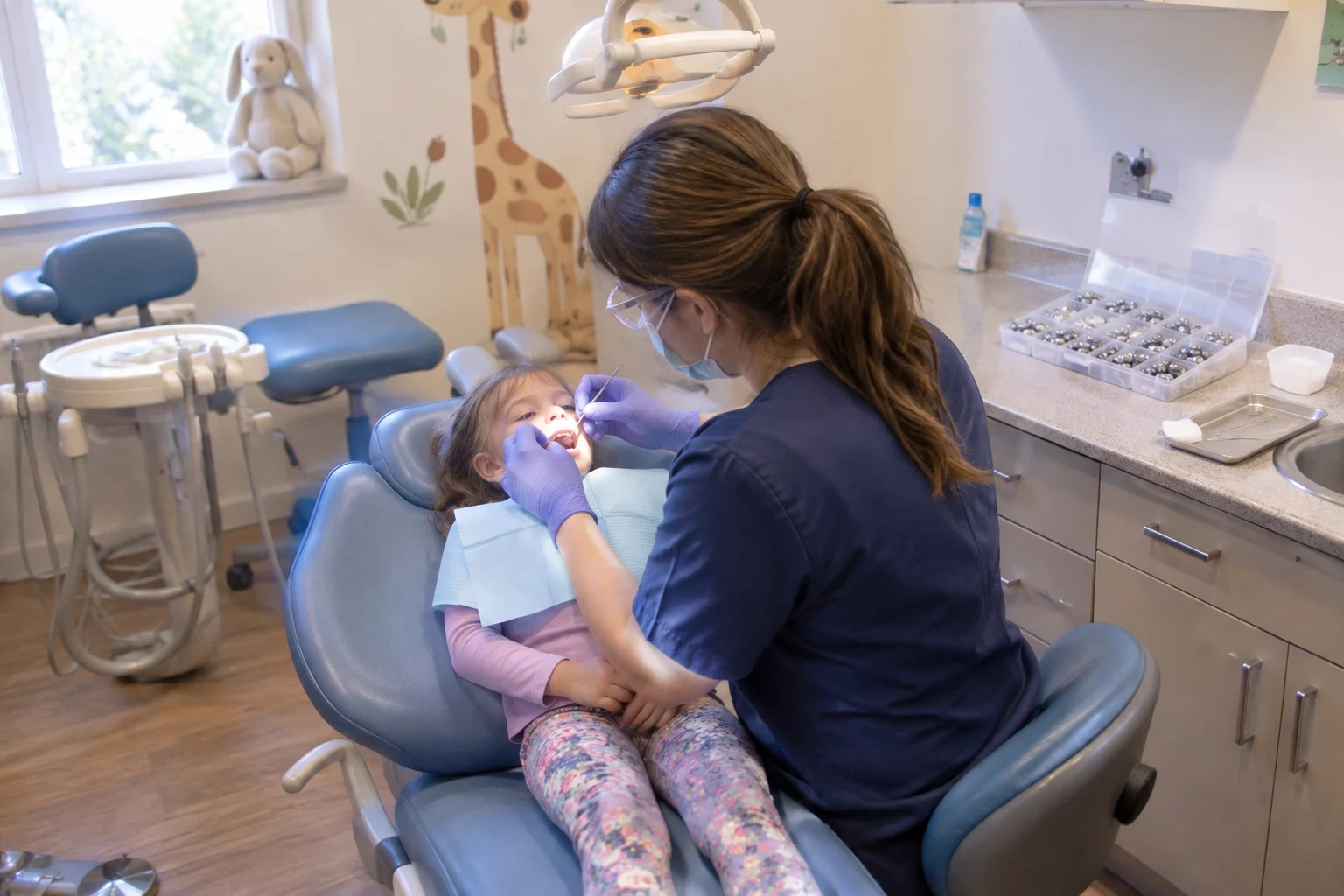
A pediatric crown is a small cap that fits over a tooth and replaces the outer walls that decay or injury wore away. It is usually used on baby molars with large cavities, on teeth that needed nerve treatment, and on front teeth that broke in a fall.
Parents often ask why we would crown a tooth that will fall out anyway. Back baby molars can stay in place until around age 10 to 12. They help your child chew, keep speech clear, and hold space for the adult teeth underneath. Losing one early can let neighboring teeth drift, which can make room for the permanent tooth harder to come by.
Over our 11+ years in practice, we have found that most families decide more easily once they see the options side by side. That is how we present them, without pressure toward one material or another.
Crown Options and What Each Involves
- Stainless steel crowns
- These are the most common crown for baby molars. They are preformed, durable, and placed in a single visit. They are silver in color, which matters less for back teeth that barely show when your child smiles.
- Zirconia crowns
- Zirconia is a tooth-colored ceramic that is strong and resists staining. It needs a little more tooth trimmed to fit and a dry, calm working area, so it suits some children and some teeth better than others. We will tell you plainly whether it is a good fit for your child.
- Tooth-colored front crowns
- For front baby teeth, we can use resin-based crowns shaped to match the natural tooth. They look natural and are gentler to place, though they can chip more easily than zirconia.
- Crowns after nerve treatment
- If decay has reached the nerve, the tooth often needs a pulpotomy first, which is the baby-tooth version of the care described on our Root Canals page. A crown then seals and protects what remains.
- Numbing and comfort
- We numb the area gently and describe each step in kid-friendly words. For children who are very anxious or need several crowns, our Sedation Dentistry page explains the calming options we offer.
Signs a Crown May Be the Right Choice
A cavity too large to fill
When decay spans two or more surfaces of a baby molar, a filling has little tooth to grip. A crown holds up better under chewing.
A cracked or broken tooth
A tooth chipped in a fall or play can be weak even when it does not hurt. Covering it can prevent a larger break later.
Recent nerve treatment
Teeth treated at the nerve become more brittle over time, so they usually need a crown to last.
Soft or poorly formed enamel
Some children have enamel that develops thin or chalky. A crown can protect a molar that keeps breaking down despite good brushing.
A filling that keeps failing
If the same tooth has needed repeated Fillings, a crown may be the more lasting answer.
How a Crown Visit Goes
- 1
Exam and an honest answer
We look at the tooth, take X-rays when needed, and explain whether a filling, crown, or another option makes the most sense. You will hear what each choice means for your child before anything begins.
- 2
Getting comfortable
We numb the tooth gently and keep the explanations simple for your child. If sedation is part of the plan, we review it with you in advance.
- 3
Shaping and fitting
Any decay is removed and the tooth is shaped slightly. Most pediatric crowns are preformed, so we choose the right size, check the bite, and cement it in the same visit.
- 4
Aftercare at your own pace
Gums may feel tender for a day or two. We go over soft-food tips, brushing around the crown, and what to watch for, and we check it at regular visits for Exams & Cleanings.
What Shapes the Cost of a Crown
The price depends on the material, the tooth, and what the tooth needs before the crown goes on. We review the plan with you before treatment and explain how your coverage is likely to apply. Most insurance plans are welcome here, and you can pay with a Visa, MasterCard or Discover card or through the CareCredit Patient Payment Plan.
- Crown material
- Stainless steel is generally the most economical choice. Zirconia and other tooth-colored crowns cost more, and insurance plans sometimes treat them differently.
- Nerve treatment first
- If the tooth needs a pulpotomy before the crown, that is a separate step with its own fee.
- Number of teeth
- Treating several teeth in one visit can be more efficient, but the total reflects each crown placed.
- Sedation
- When a child needs sedation to stay comfortable, that adds to the cost of the visit.
Questions Parents Ask About Crowns
Something not covered here? (508) 501-6702
Does getting a crown hurt?
The tooth is numbed first, so most children feel pressure rather than pain. Some feel mild gum soreness for a day or two afterward. A children's pain reliever and soft foods usually help.
Will the silver crown look strange?
On back molars, stainless steel crowns are rarely noticed except when your child opens wide. If appearance matters to you, ask about zirconia, and we will tell you honestly whether it suits that tooth.
What happens to the crown when the baby tooth falls out?
It comes out with the tooth, on the usual schedule, as the adult tooth pushes up. Nothing extra needs to be done.
Could you just pull the tooth instead?
Sometimes that is the better choice, and our Extractions page covers when. Removing a baby molar early often means your child needs a space maintainer to keep room for the adult tooth, so we weigh both paths with you.
How long does the appointment take?
A single crown usually fits in one standard visit. Several crowns or added nerve treatment take longer, and we let you know the expected length when we schedule.
Talk Through Your Child's Options
If a dentist has mentioned a crown, or a tooth looks broken or deeply decayed, we can examine it and explain each choice clearly. New families are welcome.