ServicesSealants
Dental Sealants in Marlborough
A sealant is a thin, tooth-colored coating painted into the grooves of your child's back teeth. It keeps food and bacteria out of the places a toothbrush misses. There is no drilling and usually no numbing, and most kids are finished in a few minutes per tooth.
What a Sealant Is and Why It Helps
The chewing surfaces of molars are not smooth. They are lined with pits and narrow grooves, some finer than a single toothbrush bristle. Food and plaque settle into those grooves, and that is where many childhood cavities begin. A sealant is a flowable resin that fills and covers those grooves, leaving a smoother surface that is far easier to keep clean.
Timing matters. The first permanent molars usually arrive around age six, and the second set around age twelve. Those new teeth are most vulnerable in their first few years, while the enamel is still maturing and brushing habits are still developing. Sealing them soon after they come in protects them through that window.
We like parents to understand exactly what goes on the tooth and why. Sealants do not replace brushing, flossing or fluoride treatment. They protect one specific weak spot, the grooves, and they work best alongside regular exams and cleanings.
What Your Child's Sealant Visit Includes
A close look at each groove
Before anything is applied, we check the grooves for early staining or soft spots. A sealant should only go over healthy enamel, so this step decides whether a tooth is ready.
Careful cleaning and drying
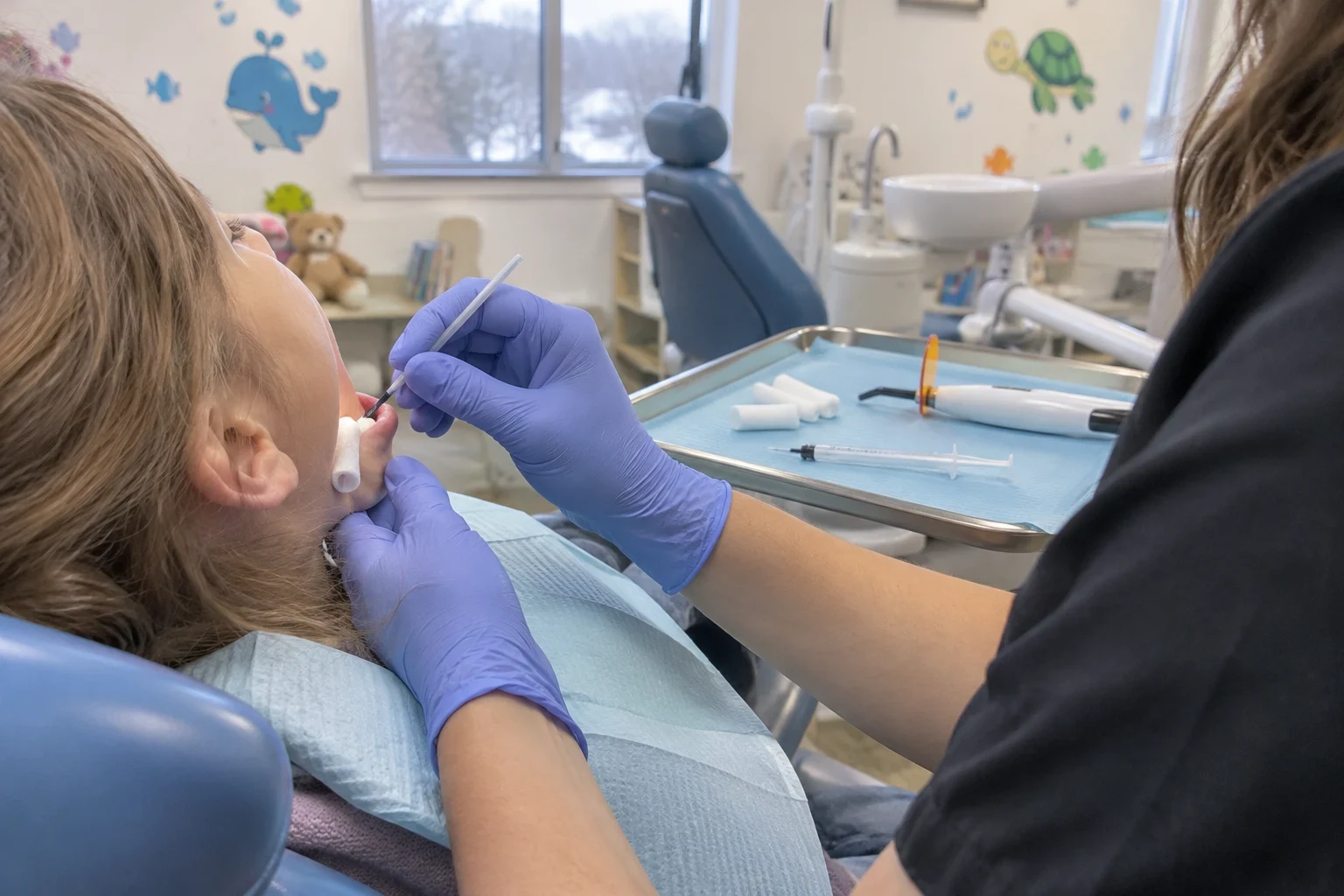
The tooth is polished clean and kept dry with small cotton rolls or a gentle isolation device. A dry surface is what lets the sealant bond well and last.
A mild conditioning step
We apply a gentle solution for a few seconds that slightly roughens the enamel at a microscopic level. It is then rinsed away. This gives the resin something to grip.
Painting and curing the sealant
The resin is brushed into the grooves and hardened with a small blue light. It sets in seconds, and your child can eat normally right after the visit.
A bite and finish check
We check the bite and the edges so the surface feels smooth to your child's tongue. Sealants are thin, so most kids stop noticing them within a day.
Signs Your Child May Be Ready for Sealants
- New molars have just come in
- If you can see a new back tooth behind the baby teeth, it may be ready to seal once it has fully erupted above the gums.
- Deep grooves you can see
- Some kids simply have deeper pits and fissures than others. If the chewing surfaces look dark or deeply lined, they are harder to clean.
- Food keeps packing into the back teeth
- Bits of cracker or granola stuck in the molar grooves after meals mean plaque is collecting there too.
- A history of cavities
- Children who have needed fillings before are more likely to develop new cavities. Sealing healthy molars lowers that risk.
- Brushing the back teeth is a struggle
- Young children and busy teens often miss the far molars. A sealant gives those teeth extra protection between visits.
How the Appointment Goes
- 1
Booking by phone
Many families schedule sealants alongside a regular exam and cleaning, so there is one trip instead of two. We will tell you on the call which teeth are likely to be done.
- 2
Explaining it to your child
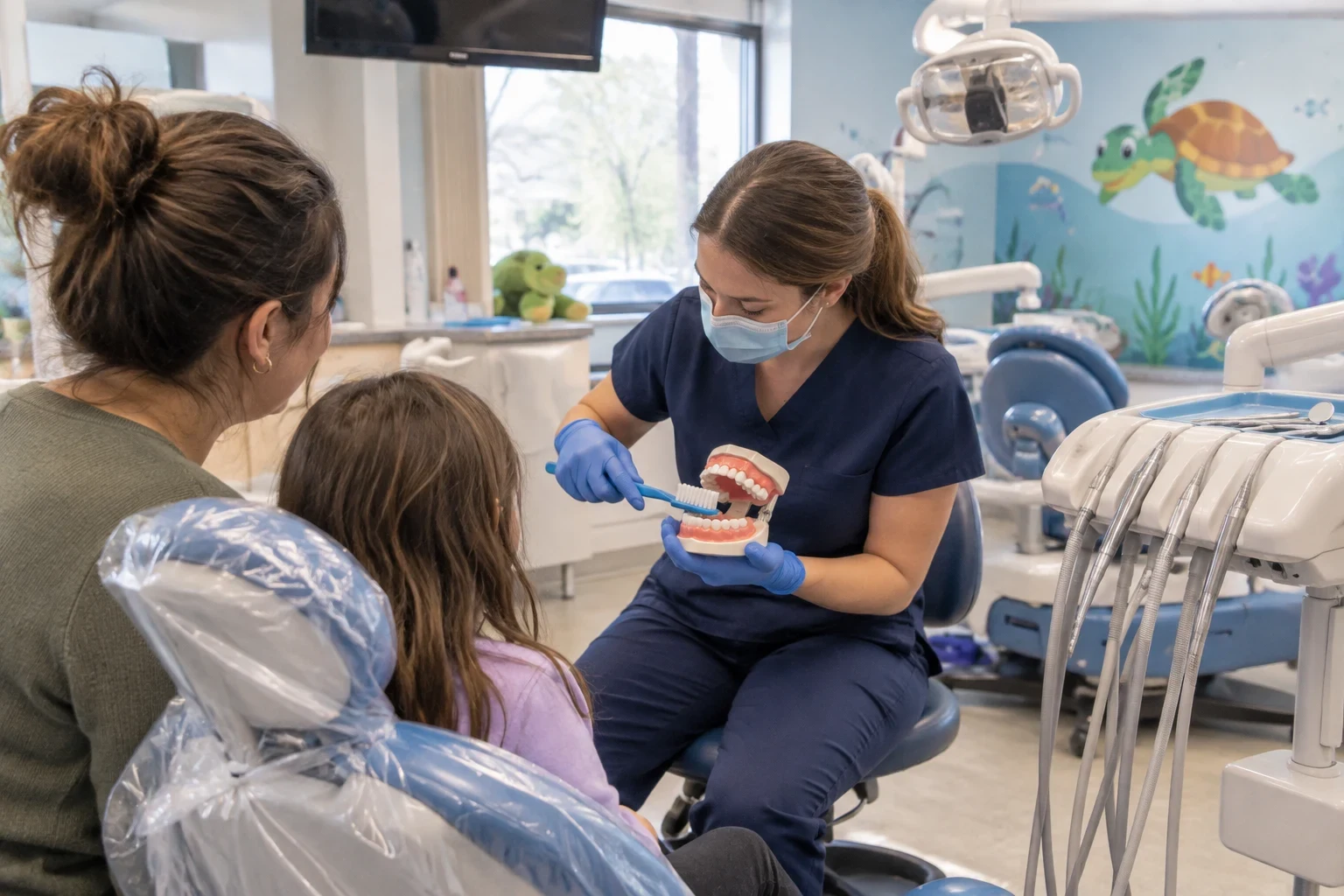
We show kids the tools and the blue light before we start, and use simple words for each step. Knowing what comes next keeps most children relaxed.
- 3
Applying the sealants
Each tooth takes only a few minutes. There are no needles and no drilling, and your child can watch a show or hold a comfort item if that helps.
- 4
Checking them at every visit
At later exams we look at each sealant for wear or small chips. A worn spot can usually be touched up quickly, without redoing the whole tooth.
What Affects the Cost of Sealants
Sealants are among the more affordable preventive steps in pediatric dentistry. What you pay mostly comes down to how many teeth we treat and how your dental plan handles them. We walk you through the details on the phone and again before treatment, so the bill matches what you expected.
- Number of teeth
- Sealants are priced per tooth. Sealing the four first molars costs less than sealing every molar and premolar.
- Insurance coverage and age limits
- Many dental plans cover sealants on permanent molars, though some set age limits or rules on how often they pay. Most insurance plans work with our office, and we are glad to go over what your policy likely includes before the visit.
- Early decay in a groove
- If a groove already shows a small soft spot, it may need a small cleanout or a filling first. That adds to the visit but keeps the problem from growing under the sealant.
- Repairs and touch-ups
- A chipped or worn sealant may need a patch later on. Small touch-ups are quick, and how your plan treats them varies.
Sealant Questions Parents Ask
- Does getting a sealant hurt?
- No. There is no drilling and normally no numbing. What most children notice is the sour taste of the conditioning solution and a bit of cotton resting against the gums. For a nervous child, that makes it a good first treatment to try.
- How long do sealants last?
- With normal wear, sealants often last several years. Hard, chewy and sticky foods wear them faster, and habits like chewing ice can chip them. We check them at every exam and touch them up when needed.
- Should baby teeth get sealants too?
- Sometimes. Most sealants go on permanent molars, but baby molars with very deep grooves or a child with frequent cavities can benefit. We will tell you plainly if we think it is worth doing for your child.
- Will my child be able to eat afterward?
- Yes. The light hardens the sealant completely before your child gets out of the chair, so regular meals and snacks can follow right away.
- What if a cavity is already starting?
- A sealant should not be placed over active decay. If we find a soft spot, we show you what we see and talk through options, which may mean a small filling first. Over our 11+ years in practice, finding these spots early has saved many kids from bigger treatment down the road.
Seal the Grooves Before Trouble Starts
When a permanent molar has fully erupted, a short sealant visit is an easy way to keep its chewing surface clean and sound. Parents bring their kids to us from Marlborough and from towns close by, including Hudson and Northborough. For payment, we accept Visa, MasterCard and Discover, work with most insurance plans, and offer the CareCredit Patient Payment Plan.