ServicesRoot Canals
Root Canals for Kids in Marlborough
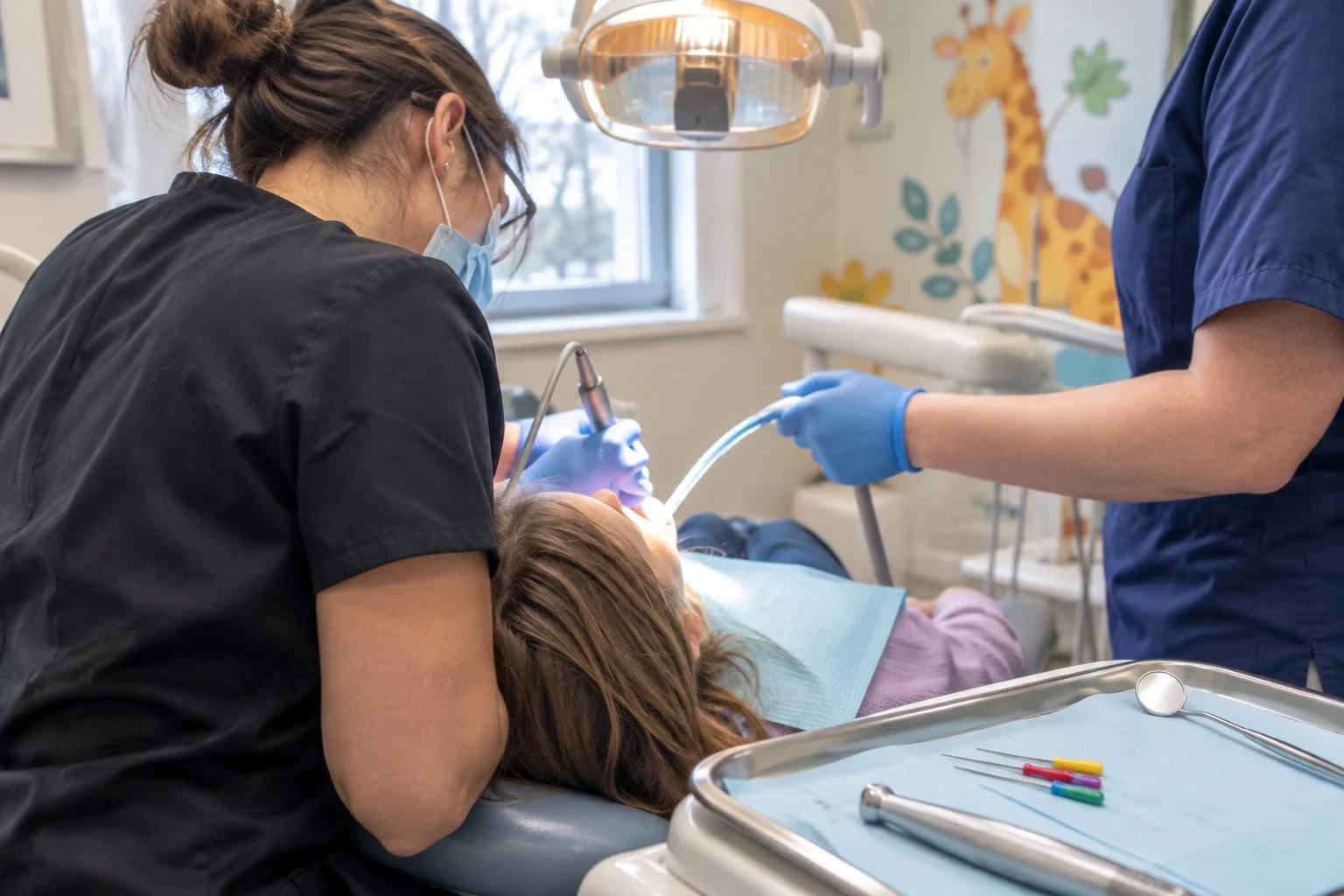
When a cavity or a bump to the mouth reaches the soft center of a tooth, we can often save the tooth instead of pulling it. We explain the options in plain terms, keep your child comfortable and walk you through each step before we begin.
What a Root Canal Means for a Child
Inside every tooth is the pulp, a small bundle of nerves and blood vessels. When decay or trauma reaches it, the pulp becomes inflamed or infected. That is the ache that wakes kids at night or flares with a cold drink.
In children, this care usually comes in one of two forms. With a pulpotomy, we take out just the irritated pulp in the top part of a baby tooth, and the roots below stay healthy and untouched. With a pulpectomy, we remove the pulp from the whole tooth, clean the canals and fill them with a material that dissolves naturally as the tooth gets closer to falling out. Older kids and teens with permanent teeth may need a traditional root canal.
Baby teeth hold space for the adult teeth, help with chewing and shape speech. Saving one that still has years of work ahead is often the kinder, simpler path than an extraction and a space maintainer. We tell you which choice fits your child and why.
What the Treatment Includes
A close look and x-rays
We examine the tooth and the gum tissue around it, then use x-rays to measure how far the decay or damage has traveled and how much healthy root remains.
Numbing done gently
A topical gel goes on first, then a slow, careful injection. We describe it to kids in words that fit their age.
Cleaning out the pulp
For a pulpotomy we remove the inflamed tissue in the crown and place a medicated dressing. For a pulpectomy we clean and shape the full canals before filling them.
Sealing the tooth
A tooth that has had its pulp treated is more brittle. Most back teeth are covered with a stainless steel or tooth-colored crown, which we explain on our Pediatric Crowns page.
Clear aftercare notes
You leave knowing what to expect that evening, what to feed your child and when to check back.
Signs Your Child May Need Pulp Treatment
Pain that lingers
A twinge from ice cream that fades in a second is often minor. Pain that keeps going after the cold or heat is gone points to the nerve.
Waking up with a toothache
Throbbing that starts on its own, especially at night, is a common sign the pulp is inflamed.
A bump on the gum
A small pimple-like spot near a tooth can be an abscess draining infection. It may not hurt, but it does need attention.
A darkened front tooth
After a fall or a hit to the mouth, a tooth that turns gray or dark weeks later may have a damaged nerve.
Swelling in the cheek or jaw
Puffiness near a sore tooth means infection may be spreading, so phone us that day to arrange a visit.
A deep cavity you can see
A large brown or black hole, or a tooth that hurts when your child chews, often means decay is close to the pulp.
How the Visit Goes
- 1
Diagnosis and a plain explanation
We look, take x-rays and tell you what we found. You hear whether the tooth can be saved, which treatment fits and what it costs before anything starts.
- 2
Getting comfortable
We numb the area slowly and keep talking your child through it. For anxious kids or longer visits, we can discuss the options on our Sedation Dentistry page.
- 3
Treating the pulp
A small rubber shield keeps the tooth dry and the mouth clear. Most pulpotomies take well under an hour; a pulpectomy can take a little longer.
- 4
Protecting the tooth
We usually place the crown at the same visit, so your child leaves with the tooth sealed and ready to chew.
- 5
Checking in later
We look at the tooth again at regular Exams & Cleanings to make sure it stays healthy until it is ready to fall out.
What Affects the Cost
No two teeth are alike, so we share the cost once the exam and x-rays are done and before any treatment starts. A handful of details shape the total more than anything else. For payment, we take Visa, MasterCard and Discover, work with most insurance plans and offer the CareCredit Patient Payment Plan.
- Pulpotomy or pulpectomy
- Removing only the upper part of the pulp is a shorter procedure with less material than cleaning and filling every canal.
- Baby tooth or permanent tooth
- An adult molar usually has more canals and calls for a different filling material, so the appointment runs longer.
- The crown afterward
- Most back teeth need a crown once the pulp is treated. Whether it is stainless steel or tooth-colored changes the total.
- Comfort options
- When sedation makes sense for your child, it is a separate part of the visit and adds to the overall cost.
- Your insurance plan
- Plans differ in how they cover pulp treatment and crowns. We can go over what your plan lists with you before you make a decision.
Root Canal Questions From Parents
Something not covered here? (508) 501-6702
Why treat a baby tooth that will fall out anyway?
Baby molars often hold on until a child is about 10 or 12. If one comes out years early, the teeth beside it can tip into the gap and leave too little room for the adult tooth underneath. Keeping it in place lets your child chew comfortably and holds that space open.
Will it hurt my child?
The tooth is numbed before we begin, so most kids feel pressure rather than pain. Many feel better afterward because the source of the ache is gone. Some soreness that evening is normal and usually eases with children's pain relief your pediatrician approves.
Is pulling the tooth a better choice?
It can be, when the tooth is badly broken down or already close to coming out on its own. An early extraction may mean your child needs a space maintainer to hold the gap. We walk you through both routes and tell you honestly which one we would pick.
How do we care for the tooth afterward?
Hold off on food until the numbness fades so your child does not chew on a lip or cheek by accident. Soft meals for the rest of the day go down easiest. Brush gently around the crown and keep the regular checkups on the calendar.
Do you treat older kids and teens too?
Yes. Over our 11+ years in practice we have cared for both baby teeth and permanent teeth, and we change how we explain things so a teenager understands the plan as well as the parent beside them.
Talk With Us About Your Child's Tooth
A toothache that lingers, a small bump on the gum or a tooth that has turned dark are all worth a look. We will examine it, explain what we see and lay out the choices, and we see kids from Marlborough as well as Hudson, Northborough and the surrounding area.