ServicesSedation Dentistry
Sedation Dentistry for Kids in Marlborough
Some children need more than a calm room and a patient dentist to get through treatment. Sedation helps an anxious child, a very young child or a child facing a longer visit stay relaxed and still. We explain each option in plain terms so you can decide with confidence.
What sedation means for your child
Sedation dentistry uses medicine to help a child feel calm during dental work. It is not the same as numbing. Local anesthetic still blocks pain at the tooth, while sedation eases the worry, the squirming and the sense that the visit will never end.
Most kids never need it. A gentle explanation, a look at the instruments and a parent close by carry many children through fillings and cleanings. We suggest sedation when the treatment is long, when your child is too young to sit still safely, or when fear has made earlier visits hard on everyone.
With 11+ years in practice, we have seen that parents worry less once they know what each option actually does. So we walk through it before anything is scheduled, and you make the call.
What a sedation visit includes
A health review first
Before we recommend anything, we go over your child's medical history, medications, allergies, breathing and snoring, and any past reactions to anesthesia. Some of those answers change which option makes sense.
Nitrous oxide, explained
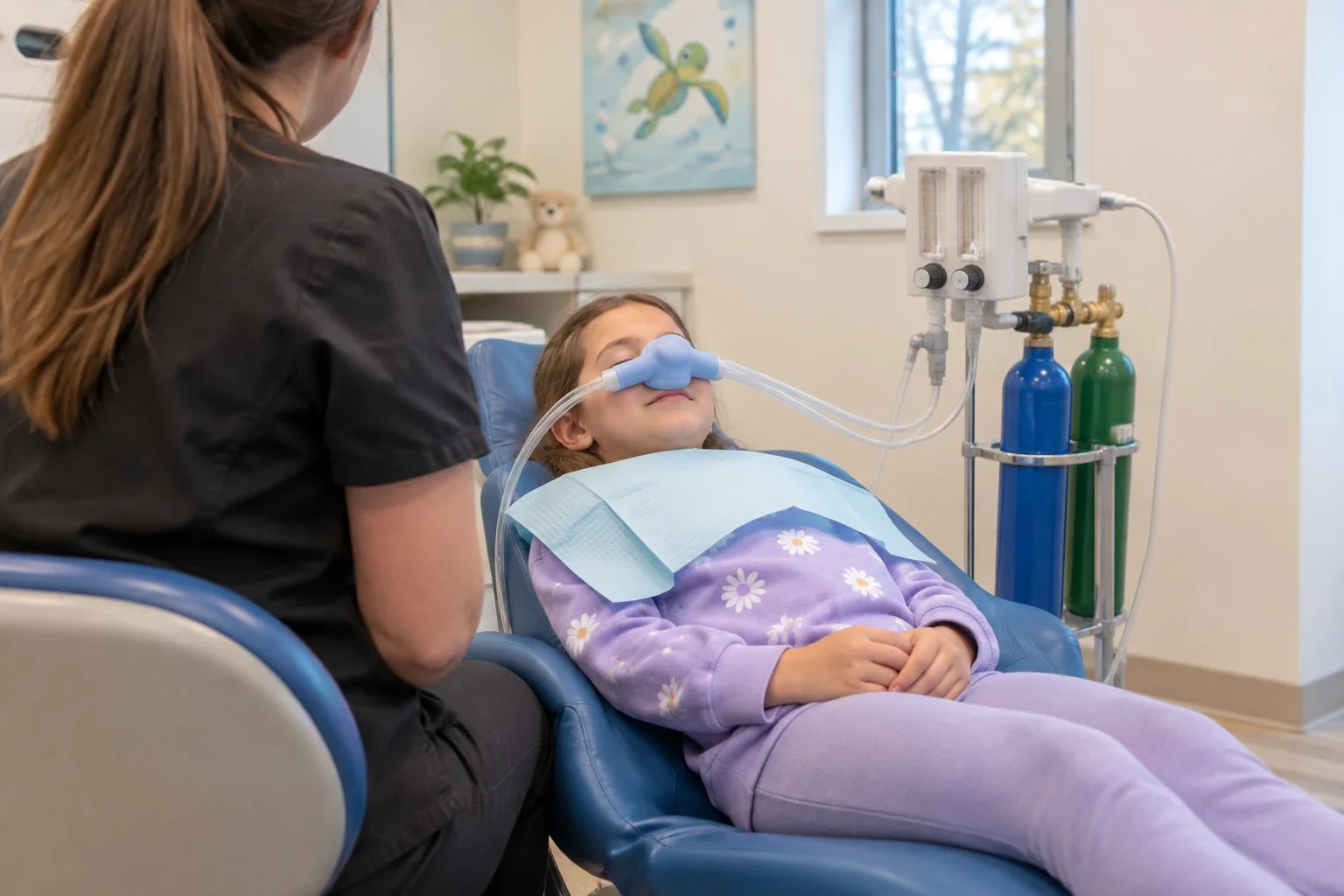
Often called laughing gas, it is breathed with oxygen through a small nose mask. Kids stay awake and can talk, and the effect fades within minutes once the mask comes off. It suits mild nerves and shorter visits.
Oral sedation, explained
A liquid medicine given at the office before treatment that makes a child drowsy and relaxed. Kids usually stay responsive but may remember little of the visit. It takes longer to wear off, so plan for a quiet rest of the day.
Monitoring from start to finish
Your child's breathing, oxygen level and heart rate are watched throughout, and a team member stays with them the whole time.
Clear before-and-after instructions
You leave the consultation knowing what your child can eat and drink beforehand, what to bring, and what the hours after the visit usually look like.
An honest answer when it isn't the right fit
If your child's health or the scale of the treatment calls for deeper care than an office visit should provide, we tell you why and explain the next step rather than pushing ahead.
Signs your child may benefit from sedation
- Fear that hasn't eased
- If past visits ended in tears, refusal or a parent holding a child still, another try without help can deepen the fear. Sedation can break that pattern.
- A lot of work at once
- Several fillings or pediatric crowns can sometimes be done in one longer, calmer visit instead of many stressful ones.
- Very young age
- Toddlers can't be asked to hold still for long. When decay needs treatment before a child is old enough to cooperate, light sedation makes the work safer and more precise.
- A strong gag reflex
- Some kids gag at the feel of a mirror or cotton roll. A relaxed child gags less, which keeps the visit shorter and easier.
- Sensory or developmental needs
- Bright lights, sounds and touch can overwhelm some children. We plan the visit around what helps your child, and sedation can soften what is left.
How the day goes
- 1
Consultation and plan
We examine your child, review their health history and explain the options in plain language. You get time to ask questions and talk it over before scheduling.
- 2
Getting ready
Follow the eating and drinking instructions exactly, since they exist for your child's safety. Soft, roomy clothing helps a drowsy child rest easily, and something familiar from bedtime, like a stuffed animal or small pillow, can make the chair feel less strange.
- 3
Treatment
We begin the sedation and wait until your child is settled. Then we numb the area and complete the work at an unhurried pace.
- 4
Recovery and the ride back
Once the work is done, we keep watching your child in a quiet spot and only send you on your way when they are awake, steady and responding normally. Expect some drowsiness after that, so plan soft foods and a low-key afternoon, and call us if any questions come up.
What affects the cost of sedation
The price depends mostly on which option your child needs and how long the visit runs. We go over the details before treatment so the bill holds no surprises. For payment, you can use a MasterCard, Visa or Discover card, and we work with most insurance plans as well as the CareCredit Patient Payment Plan.
- Type of sedation
- Nitrous oxide is simpler to give and wears off quickly. Oral sedation takes more preparation and a longer stay for monitoring.
- Length of the appointment
- A short visit for one filling costs less to sedate than a longer session covering several teeth.
- The treatment itself
- Sedation is billed separately from the fillings, crowns or extractions done during the visit, so the overall cost depends on that work too.
- Insurance coverage
- Some plans cover sedation for young children or certain needs and not others. We can help you understand what to ask your plan before the visit.
Sedation questions parents ask
- Is sedation safe for children?
- Every medicine carries some risk, which is why we start with a health review and use the lightest option that will do the job. Your child is monitored throughout and stays with us until ready to go. If anything in the history concerns us, we say so plainly.
- Will my child be asleep?
- With nitrous oxide, no. Your child stays awake and can talk to us. With oral sedation, children are very drowsy and may doze, but they can usually still respond. Neither is the same as general anesthesia.
- Can I stay with my child during treatment?
- That depends on the option and on your child. Many kids do best with a parent close by, while some settle faster without one. We will tell you what to expect at the consultation.
- Does sedation replace numbing?
- No. Sedation calms your child, and local anesthetic numbs the tooth. We use both, and the numbing goes in after your child is relaxed, so most kids barely notice it.
- How long until my child feels normal again?
- After nitrous oxide, most children are back to themselves within minutes. Oral sedation can leave a child sleepy for several hours, so keep the rest of the day quiet and watch them closely. Numbness from the anesthetic can also last a few hours, so remind them not to chew their lip or cheek.
Talk through the options with us
Set up a consultation appointment and we will look at your child's teeth, answer your questions and explain which option, if any, makes sense. New families can register on the same call.